|
PythonPlaza -
Python & AI
|
Supervised Machine Learning Algorithms
Gradient Boosting
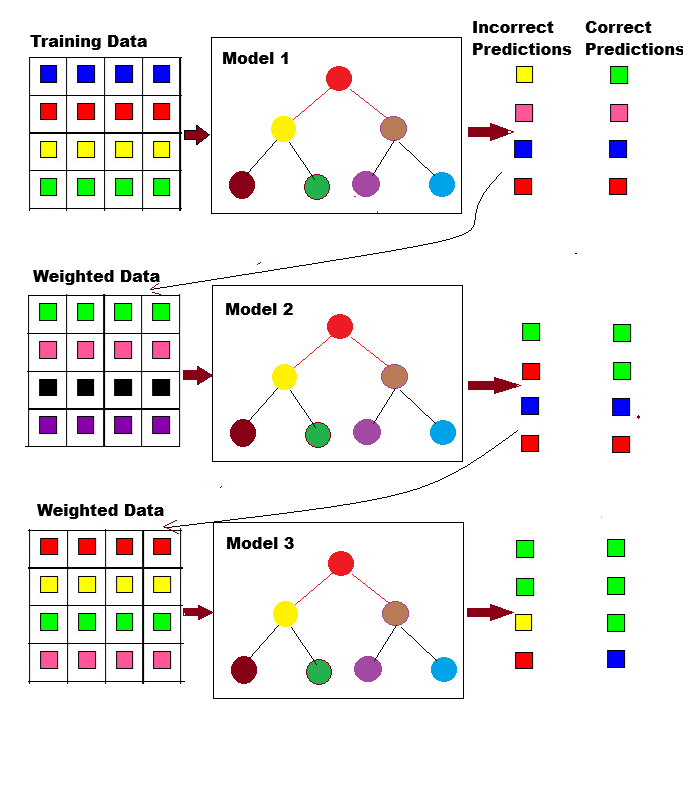
A machine learning method called Gradient Boosting creates an ensemble by combining several weak prediction models. Decision trees, which are sequentially trained to reduce errors and increase accuracy, are commonly used as these weak models. Gradient boosting can efficiently capture intricate correlations between features by combining several decision tree regressors or decision tree classifiers.
Gradient boosting's capacity to iteratively minimize the loss function is one of its main advantages. One loss function used to assess how well a machine learning model matches actual data is Mean Squared Error (MSE). MSE determines the mean of the squared discrepancies between the observed and expected values.
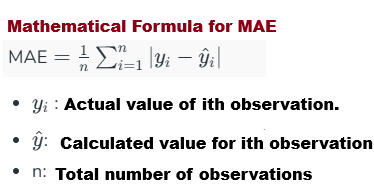
MAE (Mean Absolute Error) quantifies the average magnitude of errors for Gradient Boosting Regression.
Mean Absolute Error
It calculates the average discrepancy between a dataset's actual and forecasted values. Without taking direction into account, it displays the deviation between predicted and actual values.
1. Determined by utilizing absolute differences
2. Easy to calculate and understand
3. Handles every mistake equally
4. Not as susceptible to significant errors as MSE
5. Frequently employed to assess regression models
Gradient Boosting Classification
Complete Loan Default Prediction Example
10 Loans • 3 Independent Variables • 3 Decision Trees • Logistic Loss
η = 0.5Simple gradient/residual leaf valueF₀ computed from class proportion
1. Dataset
| Loan | Income | Debt Ratio | Credit Score | Default Y |
|---|
| 1 | $30k | 0.80 | 580 | 1 |
| 2 | $35k | 0.75 | 600 | 1 |
| 3 | $40k | 0.70 | 620 | 1 |
| 4 | $45k | 0.65 | 640 | 1 |
| 5 | $50k | 0.60 | 660 | 0 |
| 6 | $55k | 0.50 | 680 | 0 |
| 7 | $60k | 0.45 | 700 | 0 |
| 8 | $65k | 0.40 | 720 | 0 |
| 9 | $70k | 0.35 | 740 | 0 |
| 10 | $80k | 0.30 | 760 | 0 |
Y = 1 means Default; Y = 0 means No Default.
2. Calculate the Initial F₀ Correctly
There are 4 defaults among 10 loans, so the initial class probability is:
p₀ = Ŷ = 4 / 10 = 0.40
For logistic boosting, convert this probability to initial log-odds:
F₀ = ln(p₀ / (1 − p₀))
F₀ = ln(0.40 / 0.60) = ln(2/3) ≈ -0.4055
Check the conversion back to probability:
p₀ = 1 / (1 + e−F₀) = 1 / (1 + e0.4055) ≈ 0.4000
Important: We use this principled F₀, but from Tree 1 onward we use the requested simple leaf value γ = Σ(Y − p) / Nleaf.
3. Tree 1 — Credit Score Split
Residuals are the negative gradients for logistic loss:
rᵢ = Yᵢ − pᵢ
Initially p₀ = 0.4 for every loan.
| Loans | Y | p₀ | Residual Y − p₀ |
|---|
| 1–4 | 1 | 0.40 | +0.60 |
| 5–10 | 0 | 0.40 | −0.40 |
Suppose Tree 1 splits on Credit Score ≤ 650.
Credit Score ≤ 650?
YES: Loans 1–4
γ₁ = +0.6000
NO: Loans 5–10
γ₂ = −0.4000
Leaf 1(0.6 + 0.6 + 0.6 + 0.6) / 4 = 0.6000
Leaf 2(−0.4 × 6) / 6 = −0.4000
Apply η = 0.5
F₁ = F₀ + ηγ
Loans 1–4: F₁ = -0.4055 + (0.5)(0.6) = -0.1055
Loans 5–10: F₁ = -0.4055 + (0.5)(−0.4) = -0.6055
| Group | F₁ | p₁ |
|---|
| Loans 1–4 | -0.1055 | 0.4737 |
| Loans 5–10 | -0.6055 | 0.3531 |
4. Tree 2 — Debt Ratio Split
Now Tree 2 learns from the remaining residuals:
r₂ = Y − p₁
| Group | Y | p₁ | Residual |
|---|
| Loans 1–4 | 1 | 0.4737 | +0.5263 |
| Loans 5–10 | 0 | 0.3531 | -0.3531 |
Suppose Tree 2 splits on Debt Ratio > 0.625.
Debt Ratio > 0.625?
YES: Loans 1–4
γ = 0.5263
NO: Loans 5–10
γ = -0.3531
Leaf 1(4 × 0.5263) / 4 = 0.5263
Leaf 2(6 × -0.3531) / 6 = -0.3531
Apply Tree 2
Loans 1–4: F₂ = -0.1055 + (0.5)(0.5263) = 0.1577
p₂ = 1/(1 + e−0.1577) = 0.5393
Loans 5–10: F₂ = -0.6055 + (0.5)(-0.3531) = -0.7820
p₂ = 1/(1 + e−(-0.7820)) = 0.3139
5. Tree 3 — Income Split
r₃ = Y − p₂
| Group | Y | p₂ | Residual |
|---|
| Loans 1–4 | 1 | 0.5393 | +0.4607 |
| Loans 5–10 | 0 | 0.3139 | -0.3139 |
Suppose Tree 3 splits on Income ≤ $47.5k.
Income ≤ $47.5k?
YES: Loans 1–4
γ = 0.4607
NO: Loans 5–10
γ = -0.3139
Leaf 1(4 × 0.4607) / 4 = 0.4607
Leaf 2(6 × -0.3139) / 6 = -0.3139
Apply Tree 3
Loans 1–4: F₃ = 0.1577 + (0.5)(0.4607) = 0.3880
p₃ = 1/(1 + e−0.3880) = 0.5958
Loans 5–10: F₃ = -0.7820 + (0.5)(-0.3139) = -0.9390
p₃ = 1/(1 + e−(-0.9390)) = 0.2811
6. Final Results
| Loan | Y | F₀ | F₁ | F₂ | F₃ | Final p | Prediction |
|---|
| 1 | 1 | -0.4055 | -0.1055 | 0.1577 | 0.3880 | 0.5958 | Default |
| 2 | 1 | -0.4055 | -0.1055 | 0.1577 | 0.3880 | 0.5958 | Default |
| 3 | 1 | -0.4055 | -0.1055 | 0.1577 | 0.3880 | 0.5958 | Default |
| 4 | 1 | -0.4055 | -0.1055 | 0.1577 | 0.3880 | 0.5958 | Default |
| 5 | 0 | -0.4055 | -0.6055 | -0.7820 | -0.9390 | 0.2811 | No Default |
| 6 | 0 | -0.4055 | -0.6055 | -0.7820 | -0.9390 | 0.2811 | No Default |
| 7 | 0 | -0.4055 | -0.6055 | -0.7820 | -0.9390 | 0.2811 | No Default |
| 8 | 0 | -0.4055 | -0.6055 | -0.7820 | -0.9390 | 0.2811 | No Default |
| 9 | 0 | -0.4055 | -0.6055 | -0.7820 | -0.9390 | 0.2811 | No Default |
| 10 | 0 | -0.4055 | -0.6055 | -0.7820 | -0.9390 | 0.2811 | No Default |
Classification rule: p ≥ 0.5 → Default; p < 0.5 → No Default.
For this deliberately simple dataset and the selected splits, the 3-tree model classifies all 10 training loans correctly.
7. Algorithm Summary
Step 1: p₀ = number of defaults / total loans = 0.40
Step 2: F₀ = ln(p₀/(1−p₀)) = -0.4055
Step 3: rᵢ = Yᵢ − pᵢ
Step 4: γleaf = Σ(Y − p) / Nleaf
Step 5: Ft = Ft−1 + ηγ, η = 0.5
Step 6: pt = 1/(1 + e−Ft)
Step 7: Repeat for Tree 2, Tree 3, …
Key distinction: F₀ is calculated using the logistic log-odds formula. The later leaf values are intentionally the simple average residual, not the Newton/Hessian leaf formula.
Gradient Boosting Classification • Loan Default Worked Example • Simple Gradient/Residual Leaf Values
USE CASE 1: Use Gradient Boosting with scikit-learn to predict whether a loan will default. Dependent variable: Default (0 = No Default, 1 = Default) Independent variables (3): Income (monthly income, e.g., 1000–10000) CreditScore (300–850) LoanAmount (1000–50000).
import numpy as np
import pandas as pd
from sklearn.model_selection import train_test_split
from sklearn.ensemble import GradientBoostingClassifier
from sklearn.metrics import accuracy_score, confusion_matrix, classification_report, roc_auc_score

# -----------------------------------
# 1. Load data from Excel
# -----------------------------------
data = pd.read_excel("loan_data.xlsx")
df = pd.DataFrame(data)
print("Dataset Preview:")
print(data.head())

# -----------------------------------
# 2. Define features and target
# -----------------------------------
X = df[["Income", "CreditScore", "LoanAmount"]]
y = df["Default"]

# -----------------------------------
# 3. Split into training and testing
# -----------------------------------
X_train, X_test, y_train, y_test = train_test_split(
    X, y, test_size=0.3, random_state=42
)


gb_model = GradientBoostingClassifier(
    n_estimators=100,     # number of trees
    learning_rate=0.1,    # step size
    max_depth=3,          # tree depth
    random_state=42
)

gb_model.fit(X_train, y_train)


y_pred = gb_model.predict(X_test)
y_prob = gb_model.predict_proba(X_test)[:, 1]


print("Accuracy:", accuracy_score(y_test, y_pred))
print("\nConfusion Matrix:\n", confusion_matrix(y_test, y_pred))
print("\nClassification Report:\n", classification_report(y_test, y_pred))
print("\nROC-AUC Score:", roc_auc_score(y_test, y_prob))


Step 9: Predict default for a new customer
new_customer = [[4500, 620, 16000]]  # Income, CreditScore, LoanAmount

default_prediction = gb_model.predict(new_customer)
default_probability =gb_model.predict_proba(new_customer)[0][1]

print("Default Prediction:", default_prediction[0])
print("Probability of Default:", default_probability)
USE CASE 2: Customer Churn example using Gradient Boosting with scikit-learn in Python. We’ll assume 4 independent variables, for example: Tenure (months with company) - 1–60 months MonthlyCharges (amount billed per month) - 30–120 ContractType (0=Month-to-month, 1=One-year, 2=Two-year) SupportCalls (number of calls to support) 0–10 The dependent variable is Churn (0=Stay, 1=Churn)..
import numpy as np
import pandas as pd
from sklearn.model_selection import train_test_split
from sklearn.ensemble import GradientBoostingClassifier
from sklearn.metrics import accuracy_score, confusion_matrix, classification_report, roc_auc_score


# -----------------------------------
# 1. Load data from Excel
# -----------------------------------
#sample data can be exported to
#excel from the URL
# https://www.pythonplaza.com/categorical_customer_churn_1_or_0.html

data = pd.read_excel("customer_data.xlsx")

print("Dataset Preview:")
print(data.head())

# -----------------------------------
# 2. Define features and target
# -----------------------------------
X = df[["Tenure", "MonthlyCharges", "ContractType", "SupportCalls"]]
y = df["Churn"]

# -----------------------------------
# 3. Split into training and testing
# -----------------------------------
X_train, X_test, y_train, y_test = train_test_split(
    X, y, test_size=0.3, random_state=42
)


gb_model = GradientBoostingClassifier(
    n_estimators=100,     # number of trees
    learning_rate=0.1,    # step size
    max_depth=3,          # tree depth
    random_state=42
)

gb_model.fit(X_train, y_train)


y_pred = gb_model.predict(X_test)
y_prob = gb_model.predict_proba(X_test)[:, 1]


print("Accuracy:", accuracy_score(y_test, y_pred))
print("\nConfusion Matrix:\n", confusion_matrix(y_test, y_pred))
print("\nClassification Report:\n", classification_report(y_test, y_pred))
print("\nROC-AUC Score:", roc_auc_score(y_test, y_prob))

#Predict churn for a new customer
new_customer = [[8, 92, 0, 5]]
# Tenure, MonthlyCharges, ContractType, SupportCalls

churn_prediction = gb_model.predict(new_customer)
churn_probability = gb_model.predict_proba(new_customer)[0][1]

print("Churn Prediction:", churn_prediction[0])
print("Probability of Churn:", churn_probability)

#Interpreting the results (business view)
1 → High risk of churn ⚠️

0 → Likely to stay ✅

Use probability (e.g., churn > 0.6) to trigger retention offers
USE CASE 3: Use Gradient Boosting to determine what learning style a student prefers -
Visual, Auditory, Reading/Writing, Kinesthetic (Dependent Variable)
Independent variables (How a student prefers to learn)
prefers_diagrams – How much a student likes diagrams (1-5)
prefers_lectures – How much a student likes lectures (1-5)
prefers_notes – How much a student likes reading/writing notes (1-5)
prefers_hands_on – How much a student likes hands-on activities (1-5)
import numpy as np
import pandas as pd
from sklearn.model_selection import train_test_split
from sklearn.ensemble import GradientBoostingClassifier
from sklearn.metrics import accuracy_score, confusion_matrix, classification_report, roc_auc_score


# -----------------------------------
# 1. Load data from Excel
# -----------------------------------
#sample data can be exported to
#excel from the URL


  Get the Categorical learning Styles data in Excel


data = pd.read_excel("Categorical_learning_Styles.xlsx")

print("Dataset Preview:")
print(data.head())

# -----------------------------------
# 2. Define the data
# -----------------------------------
X = df[['prefers_diagrams', 'prefers_lectures',
        'prefers_notes', 'prefers_hands_on']]

y = df['learning_style']

# Encode categorical target labels
le = LabelEncoder()
y_encoded = le.fit_transform(y)

# -----------------------------------
# 3. Split into training and testing
# -----------------------------------
X_train, X_test, y_train, y_test = train_test_split(
    X, y, test_size=0.3, random_state=42
)


gb_model = GradientBoostingClassifier(
    n_estimators=100,     # number of trees
    learning_rate=0.1,    # step size
    max_depth=3,          # tree depth
    random_state=42
)

gb_model.fit(X_train, y_train)


y_pred = gb_model.predict(X_test)
y_prob = gb_model.predict_proba(X_test)[:, 1]


print("Accuracy:", accuracy_score(y_test, y_pred))
print("\nConfusion Matrix:\n", confusion_matrix(y_test, y_pred))
print("\nClassification Report:\n", classification_report(y_test, y_pred))
print("\nROC-AUC Score:", roc_auc_score(y_test, y_prob))

#Predict with sample data
new_students = np.array([
    [5, 1, 2, 1],  # Likely Visual
    [1, 5, 3, 2],  # Likely Auditory
    [2, 1, 5, 2],  # Likely Reading/Writing
    [1, 2, 1, 5]   # Likely Kinesthetic
])

# Predict encoded labels
predictions_encoded = gb_model.predict(new_students)

# Convert numeric predictions back to original labels
predictions = le.inverse_transform(predictions_encoded)

print("Predicted Learning Styles:")
print(predictions)
USE CASE 4: Use Gradient Boosting to predict if a person has a disease. Age, BloodPressure,Cholesterol,FamilyHistory, are independent variables and Disease is a dependent variable.
import numpy as np
import pandas as pd
from sklearn.model_selection import train_test_split
from sklearn.ensemble import GradientBoostingClassifier
from sklearn.metrics import accuracy_score, confusion_matrix, classification_report, roc_auc_score


# -----------------------------------
# 1. Load data from Excel
# -----------------------------------
#sample data can be exported to
#excel from the URL


  Get Disease Classification in Excel


data = pd.read_excel("patient_dosage_response.xlsx")

print("Dataset Preview:")
print(data.head())

df = pd.DataFrame(data)

# ----------------------------------
# 2. Separate Features and Target
# ----------------------------------
X = df[['Age', 'BloodPressure', 'Cholesterol', 'FamilyHistory']]
y = df['Disease']

# -----------------------------------
# 3. Split into training and testing
# -----------------------------------
X_train, X_test, y_train, y_test = train_test_split(
    X, y, test_size=0.3, random_state=42
)


gb_model = GradientBoostingClassifier(
    n_estimators=100,     # number of trees
    learning_rate=0.1,    # step size
    max_depth=3,          # tree depth
    random_state=42
)

gb_model.fit(X_train, y_train)


y_pred = gb_model.predict(X_test)
y_prob = gb_model.predict_proba(X_test)[:, 1]


print("Accuracy:", accuracy_score(y_test, y_pred))
print("\nConfusion Matrix:\n", confusion_matrix(y_test, y_pred))
print("\nClassification Report:\n", classification_report(y_test, y_pred))
print("\nROC-AUC Score:", roc_auc_score(y_test, y_prob))

new_patients = np.array([
    [45, 150, 230, 1],  # High risk
    [28, 118, 175, 0]   # Low risk
])

predictions = gb_model.predict(new_patients)

print("Disease Predictions:")
print(predictions)
About Us | Contact Us | Sitemap | Privacy Policy
About Us | Contact Us | Sitemap | Privacy Policy